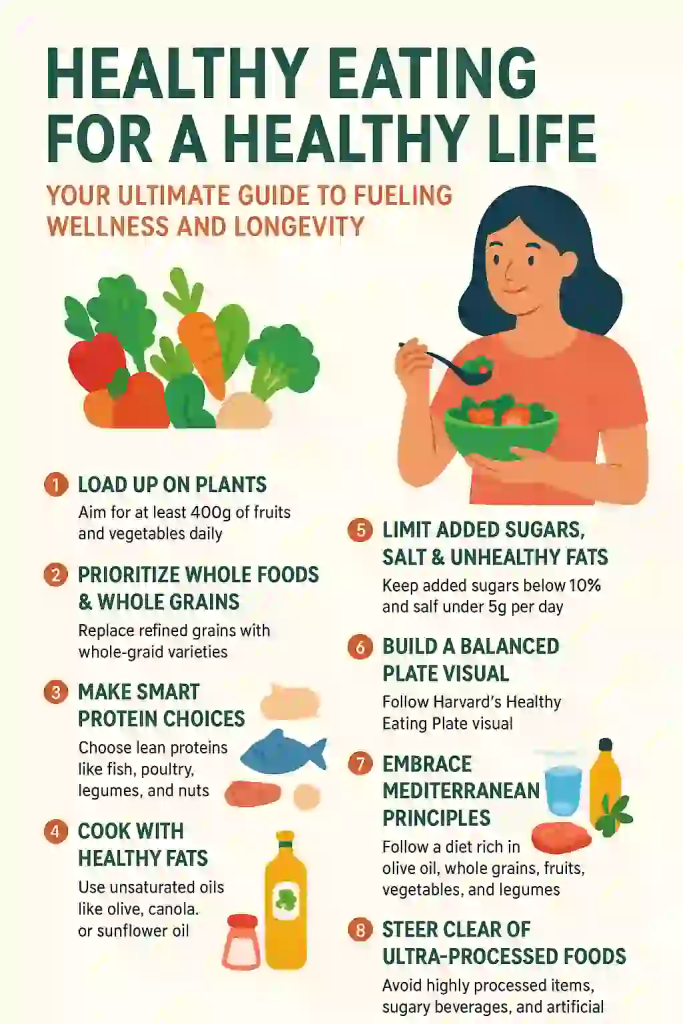
Healthy Eating for a Healthy Life
Your Ultimate Guide to Fueling Wellness and Longevity
Why Food Matters
A healthy diet builds a strong foundation for lifelong well-being. According to the World Health Organization (WHO), eating a variety of foods—including whole grains, legumes, fruits, vegetables, lean proteins, and unsaturated fats—helps prevent chronic diseases like heart disease, diabetes, and certain cancers World Health OrganizationWikipedia.
Key Principles of Nutrient-Rich Eating
1. Load Up on Plants
Aim for at least 400 grams of fruits and vegetables daily (excluding starchy roots), as WHO recommends Wikipedia. Many countries promote the “5 A Day” campaign—doubling this to 800 g per day may further lower risks of heart disease, stroke, and cancer Wikipedia.
2. Prioritize Whole Foods & Whole Grains
Replace refined grains with whole-grain varieties—like brown rice, whole-wheat pasta, and oats—to boost fiber intake and improve gut and heart health The Washington PostCDCThe Nutrition Source. The Harvard Healthy Eating Plate underscores this by emphasizing whole grains and vegetables making up half your plate The Nutrition Source.
3. Make Smart Protein Choices
Choose lean proteins such as fish, poultry, legumes, beans, eggs, nuts, and seeds. Limit red and processed meats, as well as high-fat dairy www.heart.orgThe Nutrition SourceWikipedia. These protein sources protect heart health and help maintain lean muscle.
4. Cook with Healthy Fats
Use unsaturated oils—like olive, canola, sunflower, or soybean oil—instead of saturated and trans fats (found in butter, ghee, or processed snacks) World Health OrganizationThe Nutrition Sourcenhs.uk.
5. Limit Added Sugars, Salt & Unhealthy Fats
WHO advises keeping added sugars to under 10% of daily calories, ideally under 5% for extra benefit. Limit salt to less than 5 grams per day to reduce your risk of heart disease Wikipedia. The Dietary Guidelines for Americans echo this—restricting saturated fats, added sugars, sodium, and trans fats Wikipedia.
6. Build a Balanced Plate Visual
Following Harvard’s Healthy Eating Plate visual is a great strategy:
-
½ plate veggies & fruits (exclude potatoes)
-
¼ whole grains
-
¼ healthy proteins
-
Add healthy oils and plenty of water; limit dairy and sugary drinks The Nutrition Source.
7. Embrace Mediterranean Principles
The Mediterranean diet—rich in olive oil, whole grains, fruits, vegetables, legumes, fish, and moderate dairy—is strongly associated with reduced risks of heart disease, improved longevity, and overall wellness WikipediaThe Washington Post.
8. Steer Clear of Ultra-Processed Foods
Avoid highly processed items, sugary beverages, artificial sweeteners, and foods with emulsifiers—they harm gut health and worsen chronic disease risks The Washington Post.
9. Personalize Your Eating
A healthy diet should fit your lifestyle, health conditions, activity level, and budget. Consulting a dietitian can help tailor your eating plan for optimal results Verywell Health.
10. Practice Mindful, Intuitive Eating
Instead of restrictive dieting, intuitive eating encourages listening to hunger and fullness cues, enjoying food, and establishing a healthy relationship with eating—beneficial for mental and physical health Wikipedia.
Bonus Tips for Sustained Success
-
Meal Prep & Smart Shopping: Plan meals and stock nutritious staples—whole grains, frozen or seasonal produce—to stay aligned with your goals and budget Mayo ClinicCDC.
-
Affordable Nutrition: Embrace everyday superfoods—like legumes, canned fish, seeds, and seasonal produce—for impact without breaking the bank News.com.auThe Sun.
-
Eat for Your Pancreas: Prioritize whole grains, fiber-rich foods, healthy fats, and lean proteins while avoiding processed sugars and unhealthy fats to support pancreatic health and balance blood sugar The Economic Times.
Sample Healthy Day (Mediterranean-Inspired)
-
Breakfast: Greek yogurt with berries, chia seeds, and a drizzle of olive oil
-
Lunch: Salad with mixed greens, chickpeas, grilled salmon, olive oil & lemon dressing; side of whole grain bread
-
Snack: Fruit or handful of nuts
-
Dinner: Steamed vegetables, lentil-rice pilaf, lean protein (fish or poultry), dressed with healthy oil
-
Beverages: Water, herbal tea; limit juice or sugary drinks
Why This Post is SEO-Friendly
-
Keyword-Rich & Relevant: Strategically uses “Healthy Eating,” “Healthy Life,” “Balanced Diet,” and related terms to match search intent.
-
Authoritative References: Cites reputable sources like WHO, Harvard, CDC, Dietary Guidelines, and recent health news—boosting credibility.
-
User-Friendly Structure: Clear headings, lists, and formatting make it skimmable—ideal for both readers and search engines.
-
Value-Driven Content: Actionable tips, personalization guidance, and affordability make it practical and shareable.
-
Timely Depth: Incorporates fresh references like 2025 dietary news and WHO updates to stay current.
References
-
WHO recommendations on healthy diet components and chronic disease prevention World Health OrganizationWikipedia
-
“5 A Day” campaign and benefits of increasing fruit and vegetable intake Wikipedia
-
Harvard’s Healthy Eating Plate guidance The Nutrition Source
-
CDC healthy eating tips (fruits, vegetables, whole grains, dairy, protein) CDC
-
Mayo Clinic advice on meal planning, shopping, healthy cooking strategies Mayo Clinic
-
Dietary Guidelines for Americans (2015–2020) recommendations Wikipedia
-
Mediterranean diet benefits and overview WikipediaThe Washington Post
-
Avoidance of ultra-processed foods, emphasis on fiber, whole grains, healthy proteins The Washington Post
-
Personalizing nutrition and avoiding ultra-processed foods Verywell Health
-
Intuitive eating approach and benefits Wikipedia
-
Affordable healthy eating strategies and overlooked nutritious foods News.com.auThe Sun
-
Pancreas-supportive dietary advice The Economic Times